Bite alarm guides
Bite Alarm Batteries: PP3, AAA, CR2, 23A and Rechargeable
Which battery your alarm and receiver take, how long they last, whether rechargeables are allowed, and how to avoid a flat alarm mid-session.
In short
- Common alarm batteries are PP3 9V, AAA, CR2 3V and small 23A-type 12V cells; receivers often use something different.
- Most quality alarms run for a season or longer on one battery, but cold weather and bright LEDs shorten it.
- Some makers, including Delkim, advise against rechargeable batteries in alarms designed for disposable cells.
- Built-in rechargeable alarms, such as the Wolf Icon X1, charge by USB-C instead.
Which battery does my alarm take?
This table lists the batteries published by makers or UK stockists for every alarm we cover. "Not stated" means we couldn't confirm it from a reliable listing; check the manual.
| Alarm | Alarm battery | Receiver battery |
|---|---|---|
| Delkim Txi-D v2 | 1 x PP3 9V | PP3 9V (original Rx-D listing) |
| Delkim Ev-D | Not stated | No receiver |
| Fox Mini Micron X | Not stated | 2 x AAA |
| Fox Micron MX | 2 x AAA | Not stated |
| Nash Siren R4 | 2 x AAA (stockist listing) | Built-in, USB-C rechargeable |
| Nash Siren S5R | Not stated | 1 x CR123A 3V |
| Nash Siren S5 (non-radio) | 1 x CR2 3V | No receiver |
| Wolf Icon X1 | Built-in 1000 mAh Li-ion, USB-C | HUBB / QR HUBB |
| Steve Neville Remote | 1 x LRV08 (23A-type 12V), supplied | 1 x PP3 9V |
| Sonik Herox | 2 x AAA | 3 x AAA (lamp also 3 x AAA) |
| Prologic BAT+ | 2 x AAA | 1 x PP3 9V |
| Gardner ATTs | Test battery supplied | 1 x AA (ATTx V2) |
| Korum KRI | 1 x 9V | 3 x AAA |
| Trakker DB7-R | 1 x PP3 9V | 1 x PP3 9V |
The common battery types
PP3 9V
The rectangular 9V battery found in smoke alarms. Available everywhere, which is a real advantage on a long trip. Delkim recommends a quality alkaline PP3 such as the Duracell MN1604, and older Delkim listings promised at least a year per battery.
AAA
Cheap and easy to find, and used by many budget and mid-range alarms. Sonik makes a point of using AAA across the Herox alarms, receiver and lamp, so one pack of spares covers everything.
CR2 and CR123A 3V
Small lithium cells used by Nash in the Siren S5 alarm and S5R receiver. They last well and cope with cold, but they cost more and you're unlikely to find them in a village shop.
23A-type 12V (LRV08)
A tiny cylindrical 12V cell, as used in Steve Neville heads and some Korum and Wychwood alarms. Neville says one lasts about a season. Carry a spare: they're stocked by tackle shops but not by every supermarket.
Built-in rechargeable
Wolf's Icon X1 has a 1000 mAh lithium-ion cell charged via USB-C; Wolf quotes 375 to 500 hours paired to a receiver. Nash's R4 receiver also charges by USB-C. We look at the pros and cons in are rechargeable alarms the future?
Can I use rechargeable batteries?
Only where the maker allows it. Rechargeable cells run at a slightly different voltage and discharge differently, which can upset low-battery warnings and performance. Stockists' listings for the Delkim Txi-D and the Wolf Icon Qi specifically say not to use rechargeable batteries. If your manual doesn't say, use good alkaline or lithium cells.
Batteries in cold weather
All batteries deliver less power when they're cold, and a battery that's nearly flat may work in the afternoon and fail at 4am after a frost. In winter, start each session with fresh or fully charged cells, keep spares in an inside pocket, and pay attention to low battery warnings, which may appear sooner than usual. Lithium cells such as CR2s generally cope with cold better than alkaline AAAs.
A spares kit for your tackle box
Batteries are the commonest reason an alarm fails mid-session. A small waterproof pot in your tackle box avoids it:
- One spare for each type your alarms and receiver use (for example a PP3 and two AAAs).
- A small screwdriver if your alarms have screwed battery covers; Fox supplies one with some Micron sets.
- A charged power bank and the right cable for any USB-C alarm or receiver.
- A cotton bud and pencil eraser for cleaning dirty contacts.
Disposing of old batteries
Don't put used batteries in household waste. Most UK supermarkets and shops that sell batteries have a collection point, and local recycling centres accept them too. Tape the terminals of PP3 and lithium cells before you store them for recycling, so they can't short against each other.
How to make batteries last
- Switch off properly. Use power-on protection or store alarms in hard cases that disconnect them (Wolf Icon Qi, Gardner ATTs).
- Turn LED brightness down. Delkim's Txi-D v2 offers eight levels; dim is plenty at night.
- Keep spares warm in winter. Cold reduces battery output; keep spares in an inside pocket.
- Remove batteries in the close season. A leaking cell can ruin the contacts.
- Act on the warning. Every alarm here has a low battery warning; change the battery that day.
Battery choice is just one of the specs that matter. See the rest in bite alarm specs explained, and keep your alarms working with our care and troubleshooting guide.
Questions and answers
What battery does a Delkim take?
The Delkim Txi-D takes a PP3 9V battery; stockists recommend a quality alkaline such as the Duracell MN1604 and advise against rechargeables. Batteries for every alarm.
Can I use rechargeable batteries in my bite alarm?
Only if the maker says so. Stockists advise against rechargeables in the Delkim Txi-D and Wolf Icon Qi, for example. Alarms with built-in rechargeable cells, such as the Wolf Icon X1, charge by USB-C instead.
How long do bite alarm batteries last?
Most alarms run for a season or more on one battery. Steve Neville quotes about a season; Gardner says its ATTx V2 receiver lasts up to six months of regular angling on one AA. Cold weather and bright LEDs shorten battery life.
Alarms covered in this guide
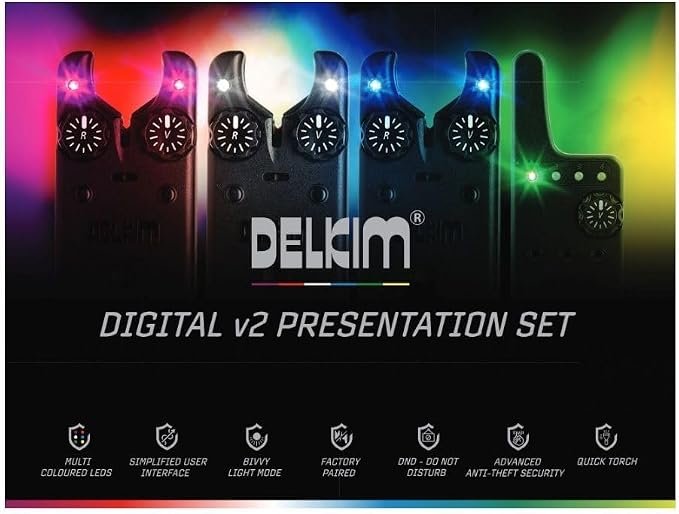
Delkim Txi-D v2 Presentation Set
Delkim's flagship piezo vibration alarm with 32 tones, six LED colours and the Rx-D v2 receiver.
View full specs (Delkim Txi-D v2 Presentation Set)
Nash Siren R4 Bite Alarm
Nash's flagship alarm, built around speed-responsive sensing, with a USB-C rechargeable receiver rated beyond…
View full specs (Nash Siren R4 Bite Alarm)
Wolf Icon X1 Bite Alarm
A compact UK-made alarm with a 1000 mAh rechargeable battery, USB-C charging and HUBB receiver link.
View full specs (Wolf Icon X1 Bite Alarm)As an Amazon Associate we earn from qualifying purchases. Some other links on this site are affiliate links too; it never changes the price you pay.