Bite alarm guides
How Do Bite Alarms Work?
A bite alarm turns movement of your line into sound and light. Here is what happens inside one, from the wheel or sensor to the receiver in your bivvy.
In short
- A bite alarm sits on a bankstick or buzz bar under the rod, and the line runs across its sensor.
- Most alarms sense movement with a magnetic roller wheel; Delkim alarms sense vibration in the line with a piezo sensor; some combine both.
- The alarm bleeps faster as line moves faster, uses a different tone for drop-backs, and lights an LED that stays on to show which rod moved.
- Many alarms also transmit by radio to a receiver, so you can hear a take from your bivvy.
What a bite alarm does
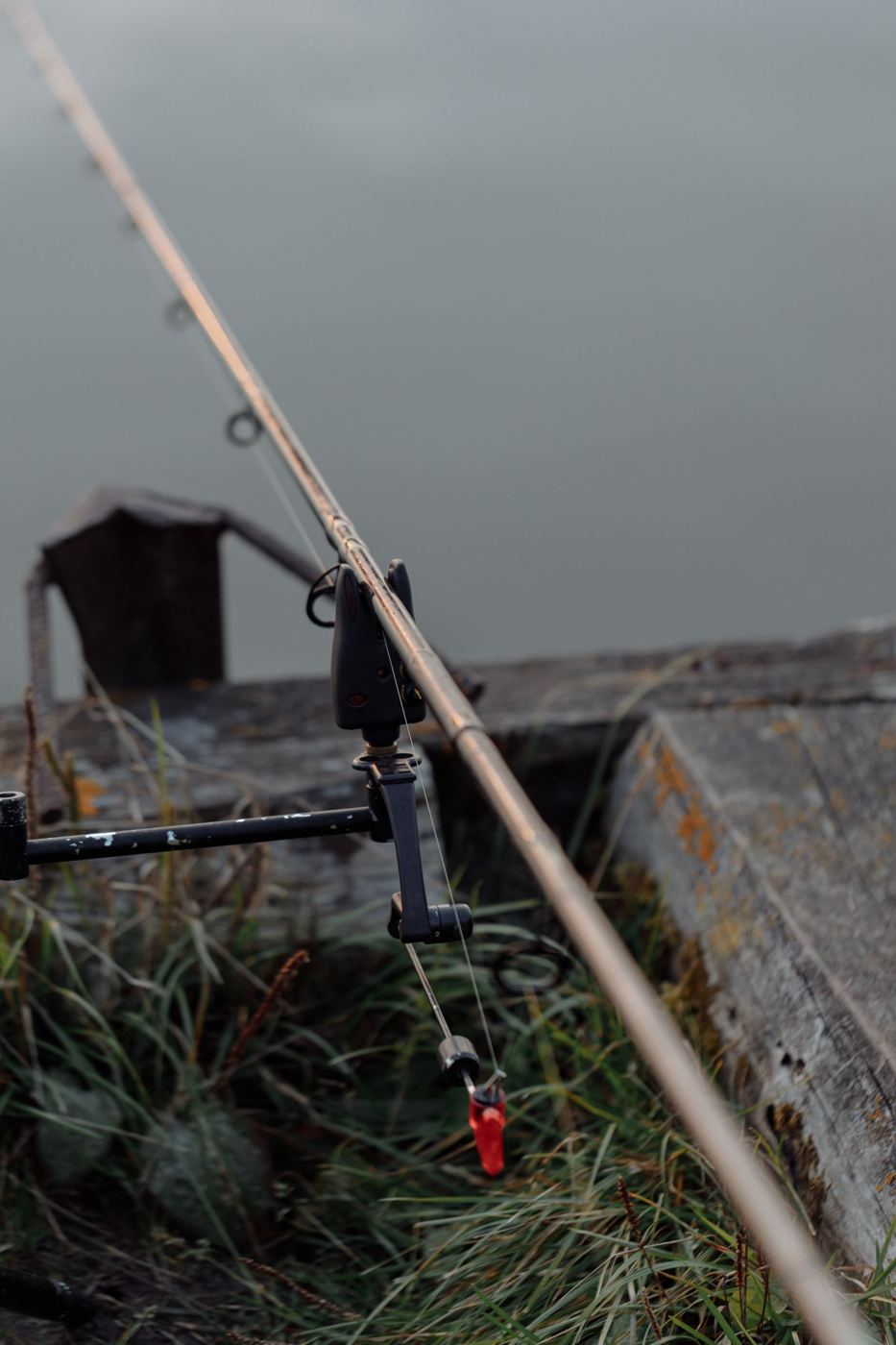
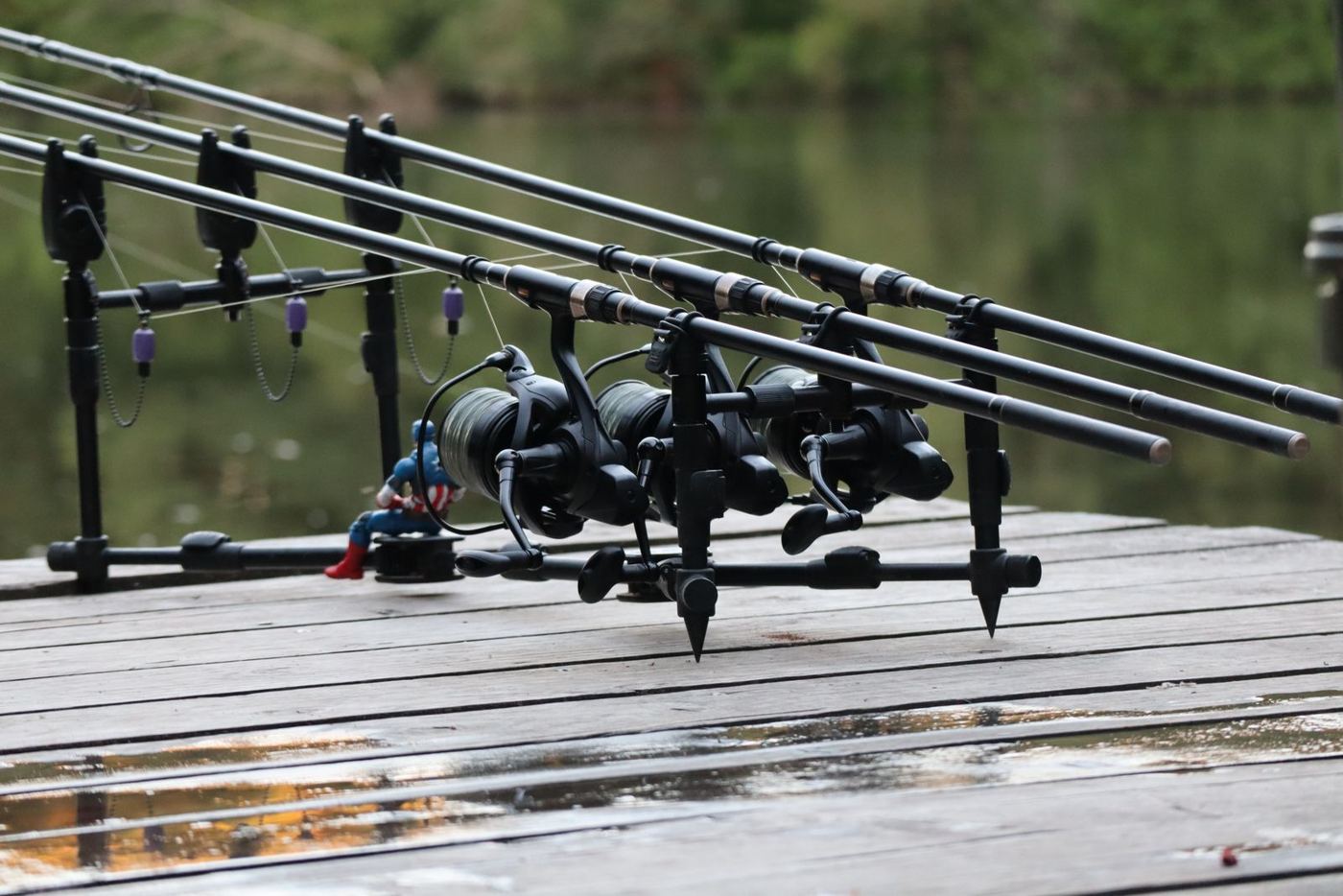
When you fish static baits for carp, tench, barbel or bream, the rod sits still on rests for hours. A bite alarm watches the line for you. It screws onto a bankstick or buzz bar, the rod rests in a V-shaped cradle on top, and the main line runs across a sensor just in front of the reel. When a fish picks up the bait and moves off, the line moves, and the alarm sounds.
That sounds simple, but a good alarm has to tell the difference between a carp running off with your rig, a fish moving towards you, the wind plucking at the line, and undertow dragging it gently back and forth. How each alarm does that is the main difference between a cheap one and an expensive one.
The three ways alarms sense a take
Roller wheel
Most alarms on the market, from budget sets to the Trakker DB7-R, use a roller wheel. The line sits on a small wheel; as it moves, the wheel turns, and magnets in the wheel pass a sensor inside the body. Each pass sends a pulse to the electronics, which turn it into a bleep. More magnets mean more pulses for the same length of line, which is why some makers quote the number of magnets: Steve Neville uses four, Trakker eight, and Gardner's ATTs lets you swap wheels with two, four or six.
Vibration (piezo)
Delkim alarms take a different route. Instead of a wheel, a piezo sensor picks up vibration in the line as it moves across the alarm. There are no moving parts in the sensing path, so frost and weed on a wheel are not a concern. The trade-off is that vibration sensing needs setting carefully, because wind and rain also cause vibration.
Dual and "intelligent" sensing
Newer alarms combine methods or add processing. Wolf's Icon Qi pairs vibration detection with a roller wheel. Nash's Siren R4 reacts to the speed of line movement and uses wave sensing to ignore the regular back-and-forth of a choppy lake. Our roller wheel vs vibration guide compares them in detail.
From pulse to bleep
Whatever the sensor, the alarm's electronics count pulses and turn them into sound. A slow, steady creep gives an occasional bleep; a fish bolting gives a continuous "one-toner". The sensitivity setting decides how much movement is needed before the alarm reacts, and the tone and volume settings let you tell rods apart in the dark.
Most modern alarms also recognise direction. If a fish swims towards you, the line goes slack and the indicator drops. This is a drop-back, and alarms usually signal it with a falling or different tone, sometimes with a flashing LED instead of a solid one.
LEDs: which rod is it?
Every alarm has at least one LED that lights with each bleep. Most also have a latching LED that stays lit for a few seconds after the line stops, so you can see which rod moved when you stumble out of the bivvy. Wychwood's AVX offers 10 to 40 seconds; JRC's Radar CR holds for 15 seconds. Many alarms let you choose the LED colour so each rod has its own.
Receivers: hearing a take from the bivvy
A transmitting alarm sends a radio signal to a receiver, a small handset you keep in the bivvy or clip to your clothing. The receiver copies the alarm's bleeps and LED colour, and often vibrates, so you can turn the alarm heads down or off and keep the bank quiet. Some systems go further: Gardner's ATTs has no speaker at all, so every sound comes from the receiver. Our receivers guide covers range, pairing and interference.
Bite indicators: the other half of the system
An alarm only reacts when the line moves across it. A bite indicator, such as a hanger, bobbin or swinger, clips on the line between the alarm and the reel, keeps the line tight across the sensor, and shows drop-backs clearly. Many alarms have a socket that lights an illuminated indicator in time with the alarm. See bite indicators and hangers.
What powers a bite alarm
Most alarms run for a season or more on a single battery. PP3 9V batteries are common in Delkim and Trakker alarms, AAA cells in Fox, Sonik and Prologic, and small 12V cells in Steve Neville heads. Wolf's Icon X1 uses a built-in rechargeable cell charged by USB-C. Our batteries guide lists what each alarm needs.
Where to go next
If you're buying, read how to choose a bite alarm, then compare all 16 alarms side by side in our comparison table. If you already own alarms, our set-up guide will help you get the sensitivity right.
Questions and answers
How does a bite alarm work?
A bite alarm sits under the rod with the line running across a sensor. When a fish moves the line, the sensor (usually a magnetic roller wheel, or a vibration sensor on Delkim alarms) sends pulses to the electronics, which sound a bleep and light an LED. Read how bite alarms work.
What is a drop-back on a bite alarm?
A drop-back happens when a fish swims towards you, the line goes slack and the indicator falls. Most alarms signal it with a falling or different tone, and some flash the LED instead of holding it solid.
Alarms covered in this guide

Delkim Txi-D v2 Presentation Set
Delkim's flagship piezo vibration alarm with 32 tones, six LED colours and the Rx-D v2 receiver.
View full specs (Delkim Txi-D v2 Presentation Set)
Nash Siren R4 Bite Alarm
Nash's flagship alarm, built around speed-responsive sensing, with a USB-C rechargeable receiver rated beyond…
View full specs (Nash Siren R4 Bite Alarm)
Wolf Icon X1 Bite Alarm
A compact UK-made alarm with a 1000 mAh rechargeable battery, USB-C charging and HUBB receiver link.
View full specs (Wolf Icon X1 Bite Alarm)As an Amazon Associate we earn from qualifying purchases. Some other links on this site are affiliate links too; it never changes the price you pay.